Integrating Trial Play with Bankroll Management in Live Broadcast Wheel Games
Written by Mara Brooks · Oct 24, 2026
Integrating Trial Play with Bankroll Management in Live Broadcast Wheel Games
Live dealer wheel formats combine streamed table action with interactive betting interfaces, and participants often begin with trial sessions that replicate real-time conditions while excluding actual fund transfers. These sessions allow observation of wheel dynamics, dealer pacing, and broadcast latency patterns, yet the transition to funded play requires deliberate capital preservation methods that limit exposure during initial real-stake rounds. Observers note that platforms have expanded hybrid tools since early 2025, enabling seamless movement from demo environments into controlled live segments without resetting session parameters.
Core Elements of Trial Sessions in Broadcast Formats
Trial environments replicate the full broadcast feed, including multi-camera angles and chat functions, so users practice timing bets relative to the wheel spin cycle and dealer announcements. Research from the University of Nevada's International Gaming Institute indicates that repeated exposure to these simulated conditions correlates with improved recognition of common outcome distributions across extended sequences. Data collected through platform analytics further shows that players who complete at least fifteen trial rounds before entering live tables record lower average bet variance in their first ten funded spins, and this pattern holds across multiple operator datasets examined through October 2026.
Capital Preservation Tactics Applied During Transition
Preservation methods center on predefined loss thresholds and incremental stake scaling that activate once a user exits trial mode. Systems typically enforce a maximum drawdown cap equivalent to a fixed percentage of the starting balance, while bet sizes remain proportional to remaining funds rather than fixed amounts. Industry reports from the Canadian Gaming Association highlight that operators incorporating automated alerts at 25 percent and 50 percent depletion points observe measurable reductions in rapid balance exhaustion among new participants. These alerts function within the same broadcast interface, preserving continuity between practice and real play without requiring separate applications or resets.
Bridging Mechanisms in Dealer Broadcast Environments
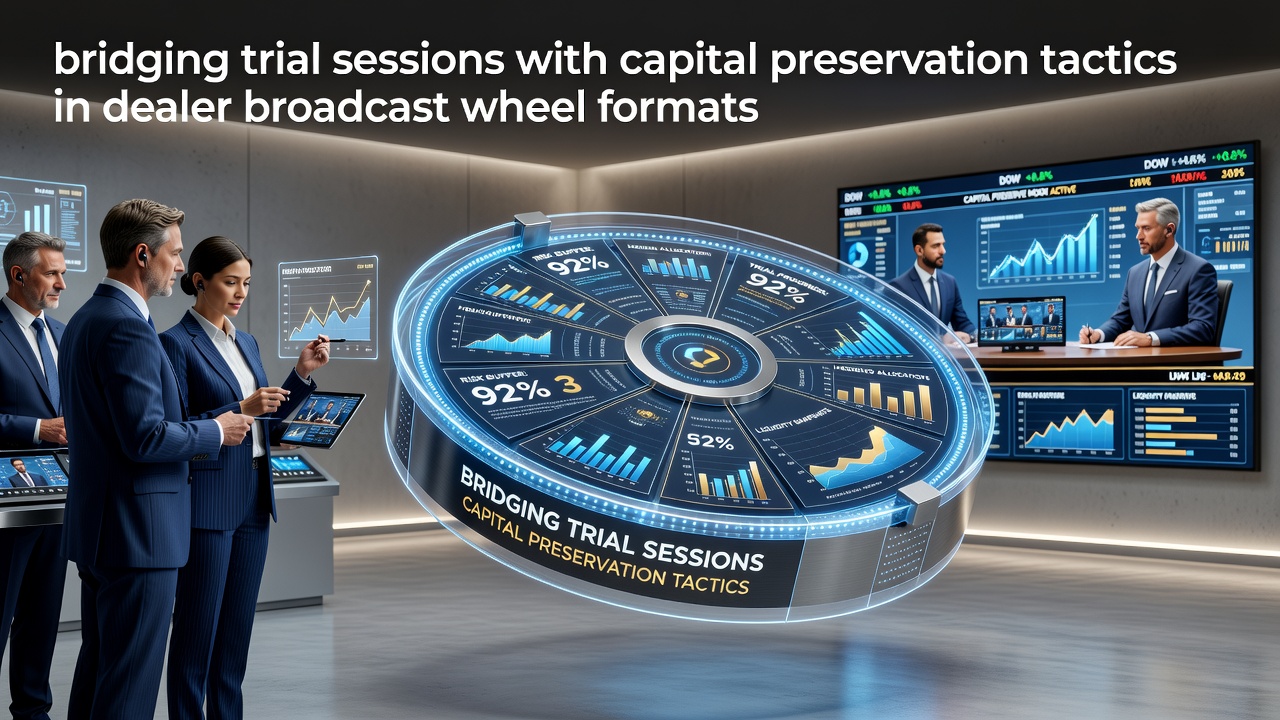
Seamless bridging occurs through session-state carryover features that import trial-derived parameters such as preferred betting windows and wheel-sector preferences directly into live tables. Broadcast overlays display running capital metrics alongside the video feed, allowing continuous monitoring without leaving the primary screen. One study released by the Australian Institute of Criminology in 2025 documented that interfaces providing persistent capital readouts during the shift from trial to live reduced instances of unplanned stake escalation by measurable margins across sampled user cohorts. Platforms continue to refine these overlays as of October 2026, incorporating color-coded depletion indicators that update in real time with each resolved spin.

Additional bridging tools include optional pause functions that freeze both trial and live progression when capital thresholds approach preset limits. This pause suspends the broadcast feed momentarily while preserving wheel state data, enabling users to review accumulated statistics before deciding whether to resume or conclude the session. Figures from European gaming trade analyses reveal that such pause-and-review intervals appear most frequently among accounts maintaining positive session balances over multi-hour periods, and the same reports note consistent adoption rates across regulated markets outside the United Kingdom.
Observed Patterns Across Operator Platforms
Multiple operators now embed capital tracking modules that activate automatically upon exit from trial mode, logging every bet relative to the initial preservation target. Those modules generate post-session summaries that compare trial performance metrics against live outcomes, highlighting deviations in bet sizing or timing. Data aggregated by the Nevada Gaming Control Board through mid-2026 indicates that accounts utilizing these comparative summaries demonstrate steadier adherence to original stake plans across subsequent sessions. The summaries also flag recurring patterns such as increased bet frequency after consecutive non-winning spins, providing factual feedback rather than prescriptive advice.
Conclusion
Integration of trial sessions with capital preservation tactics in dealer broadcast wheel formats relies on shared interface elements, automated thresholds, and state carryover features that maintain continuity while enforcing spending boundaries. Available data from regulatory and academic sources document measurable differences in session outcomes when these elements operate together, particularly in environments where broadcast feeds remain the central user focus. Continued platform development through October 2026 centers on refining real-time metrics and pause mechanisms to support consistent application of preservation rules across trial-to-live transitions.